

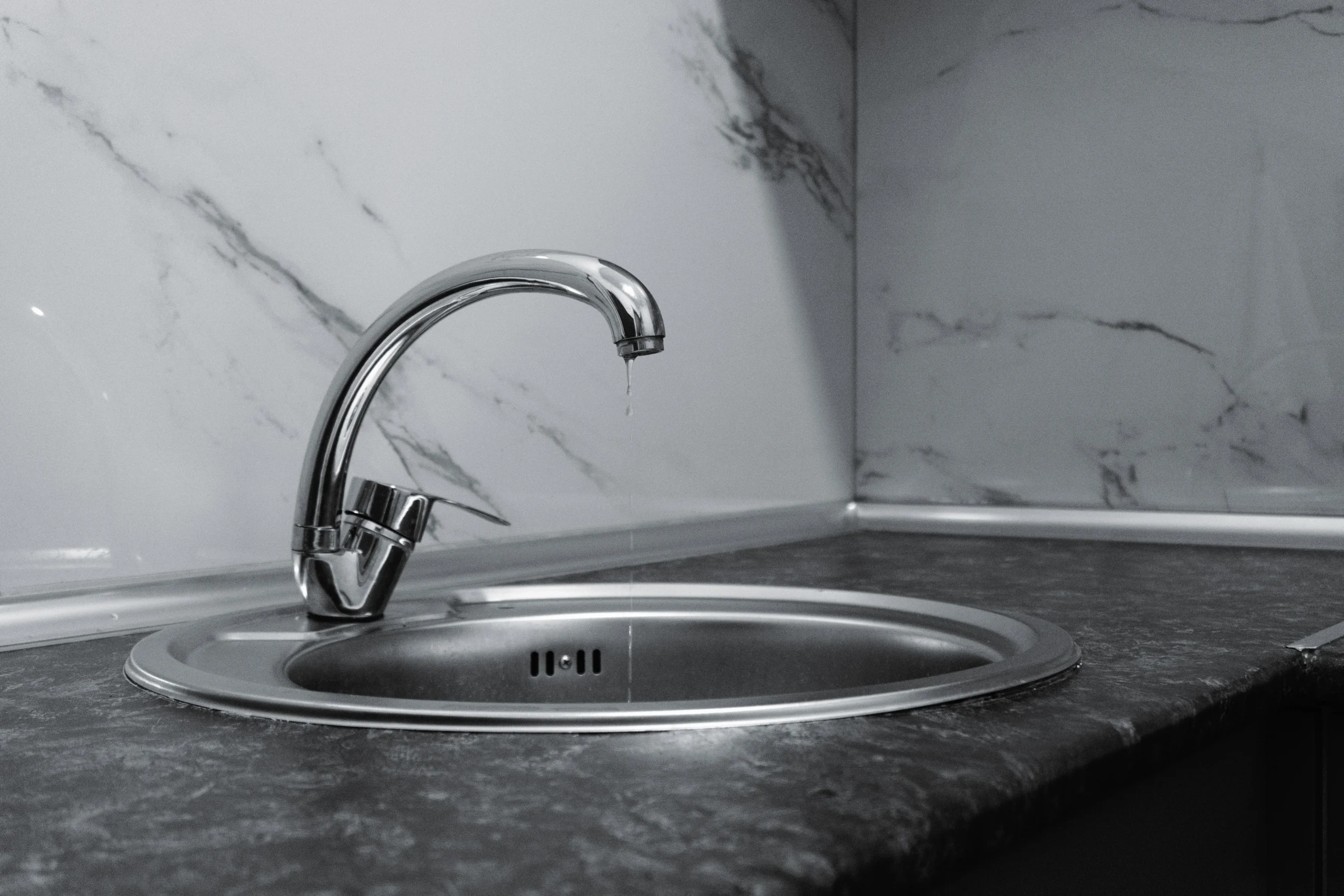
A dripping faucet is almost always caused by one of five worn faucet parts: a rubber washer, an O-ring, a cartridge, a valve seat, or, in older two-handle faucets, a compression stem. Which part you need depends on your faucet type and where the water is escaping. A drip from the spout usually points to a worn washer, cartridge, or valve seat, while water seeping around the handle or base typically means a failed O-ring. Once you match the symptom to the part, the fix is inexpensive and well within reach of most homeowners.
Here is how to narrow it down.
First, Identify Your Faucet Type
The internal parts differ by faucet design, so this step determines everything that follows.
Compression faucets have separate hot and cold handles that you tighten down to stop the water. They are the oldest design and rely on rubber washers.
Cartridge faucets may have one or two handles, and the handles move smoothly without the tightening feel. A replaceable cartridge controls the flow.
Ball faucets have a single handle that moves over a rounded cap, common in older kitchens.
Ceramic disc faucets have a single lever and use a pair of ceramic discs inside a cylinder. They are the most durable design and drip the least.
If you are not sure which you have, the handle behaviour is the best clue: a handle you crank tight is compression, and everything else is best identified by the model number, which you will want anyway when buying parts.
Cause 1: A Worn Rubber Washer
If you have a compression faucet dripping from the spout, the washer is the prime suspect. Every time the faucet closes, the washer presses against the valve seat, and years of that friction wear it down until it no longer seals.
The part you need: a replacement washer matched to your faucet’s size. Washers come in flat and beveled profiles, and using the wrong profile causes the drip to return quickly. Buy a small assortment or bring the old washer with you to match it exactly.
Cause 2: A Failed O-Ring
Water pooling around the handle or seeping at the base of the spout points to an O-ring. These thin rubber rings seal the joints where parts rotate, and they dry out, crack, and flatten with age.
The part you need: a matching O-ring, sized precisely. O-rings are inexpensive, so replacing all of them while the faucet is apart is standard practice. A dab of silicone plumber’s grease on the new rings helps them seat properly and extends their life. This kind of leak is one of the [common faucet issues] that gets mistaken for a much bigger problem than it is.
Cause 3: A Worn Cartridge
In cartridge faucets, drips from the spout, handles that feel stiff or gritty, or trouble getting the temperature right all point to the cartridge itself. The internal seals wear out, and mineral deposits accelerate the process, especially in hard water areas.
The part you need: a replacement cartridge for your exact faucet model. Cartridges are not interchangeable between brands or even between models within a brand, so the model number matters. If the brand is unknown, bring the old cartridge to a plumbing supply counter and match it in person.
Cause 4: A Corroded Valve Seat
The valve seat is the brass surface the washer or seal presses against inside the faucet body. Mineral-laden water corrodes and pits that surface over time, and once it is rough, even a brand-new washer cannot seal against it. The telltale sign is a drip that returns shortly after you have replaced the washer.
The part you need: either a replacement valve seat, removed with an inexpensive seat wrench, or a seat grinding tool that resurfaces the existing seat. If the seat is replaceable, swapping it is the more reliable fix.
Cause 5: A Worn Compression Stem
In older two-handle faucets, the entire stem assembly, which includes the threads, packing, and washer mount, can wear to the point where new washers no longer help. Symptoms include a handle that feels loose or wobbly, leaks around the handle when the water runs, and persistent dripping despite fresh washers.
The part you need: a replacement stem matched to your faucet. Stems vary widely, so bring the old one when shopping. If your faucet is old enough that stems are hard to source, it may be worth weighing the cost of parts against a full faucet replacement, particularly if you have been eyeing an upgrade anyway.
When Replacement Beats Repair
Repair is usually the economical choice, but not always. If the faucet body itself is corroded, if multiple parts have failed at once, or if the fixture is decades old and parts are scarce, a new faucet is often the better investment. Modern faucets also offer water efficiency gains that older fixtures cannot match, and if that is a priority, our guide to low flow faucets covers what to look for.
For kitchen faucets specifically, a persistent drip is sometimes the nudge that starts a larger rethink of the sink area. If that is where you are headed, our kitchen sink buying guide is a useful companion read before you commit to new fixtures.
The Cost of Ignoring a Drip
One drip per second wastes thousands of litres of water per year, and a hot-side drip wastes the energy used to heat that water too. Drips also worsen over time as the worn part continues to degrade, and slow leaks around handles and bases can quietly damage countertops and cabinets. A part that costs a few dollars today is the cheap version of this problem.
FAQs
What is the most common cause of a dripping faucet?
A worn rubber washer or a worn cartridge, depending on the faucet type. Compression faucets drip because of washers, while single-handle and modern two-handle faucets usually drip because of worn cartridge seals.
How do I know which faucet part to buy?
Match the symptom to the part: spout drips point to washers, cartridges, or valve seats, while leaks around the handle or base point to O-rings. Then find your faucet’s brand and model number, since cartridges, stems, and seals are model-specific.
Why does my faucet still drip after replacing the washer?
A corroded valve seat is the usual reason. If the brass seat the washer presses against is pitted, no washer will seal against it. Resurfacing or replacing the valve seat solves the problem.
Are faucet cartridges universal?
No. Cartridges are specific to the faucet brand and model. Buying by model number, or matching the old cartridge in person at a plumbing supply store, is the only reliable way to get the right one.
Is it cheaper to repair or replace a dripping faucet?
Repair is cheaper in most cases, since washers, O-rings, and cartridges cost little. Replacement makes more sense when the faucet body is corroded, several parts have failed, or the fixture is old enough that parts are difficult to find.
Stop the Drip With the Right Part
A drip this small deserves a fix this cheap. Pull the worn washer, O-ring, cartridge, or stem, bring it in to Chatham Plumbing, and match it against the real thing rather than squinting at packaging in a big-box aisle. The parts counter carries components for a wide range of faucet brands and ages, along with the plumber’s grease, seat wrenches, and tools that make repairs go smoothly. And if the faucet turns out to be past saving, the showroom’s full faucet selection is a few steps away. For anything beyond a parts swap, the team can point you to reputable local plumbers in the area.