

The main difference between pull-down and pull-out kitchen faucets comes down to the direction the spray head travels. A pull-down faucet has a tall, arched spout with a head that pulls straight down into the sink, which makes it ideal for filling tall pots and rinsing dishes in deep basins. A pull-out faucet has a shorter spout with a head that pulls out toward you, giving you a longer hose and more reach, which suits shallow sinks, low cabinets, and tasks like filling containers on the counter. Neither design is better across the board. The right choice depends on your sink depth, the space above it, and how you actually use your kitchen.
How Pull-Down Kitchen Faucets Work
Pull-down faucets are the style you see most often in newer kitchens. The spout forms a high arc, and the spray head docks at the very top. When you need it, you pull the head downward into the basin. The hose is relatively short, usually enough to reach every corner of the sink but not much beyond it.
That high arc is the big draw. It creates generous clearance underneath, so stockpots, pitchers, and large mixing bowls slide under the spout without tilting. The downward motion also feels natural for most sink work. You are almost always spraying down into the basin, and the head returns to its dock with a simple upward push.
Where Pull-Down Designs Shine
Pull-down kitchen faucets pair especially well with deep single-bowl sinks. The tall spout plus a deep basin gives you a large working zone with minimal splashing. Home cooks who wash produce, rinse cookware, or scrub baking sheets daily tend to prefer this layout.
Where They Fall Short
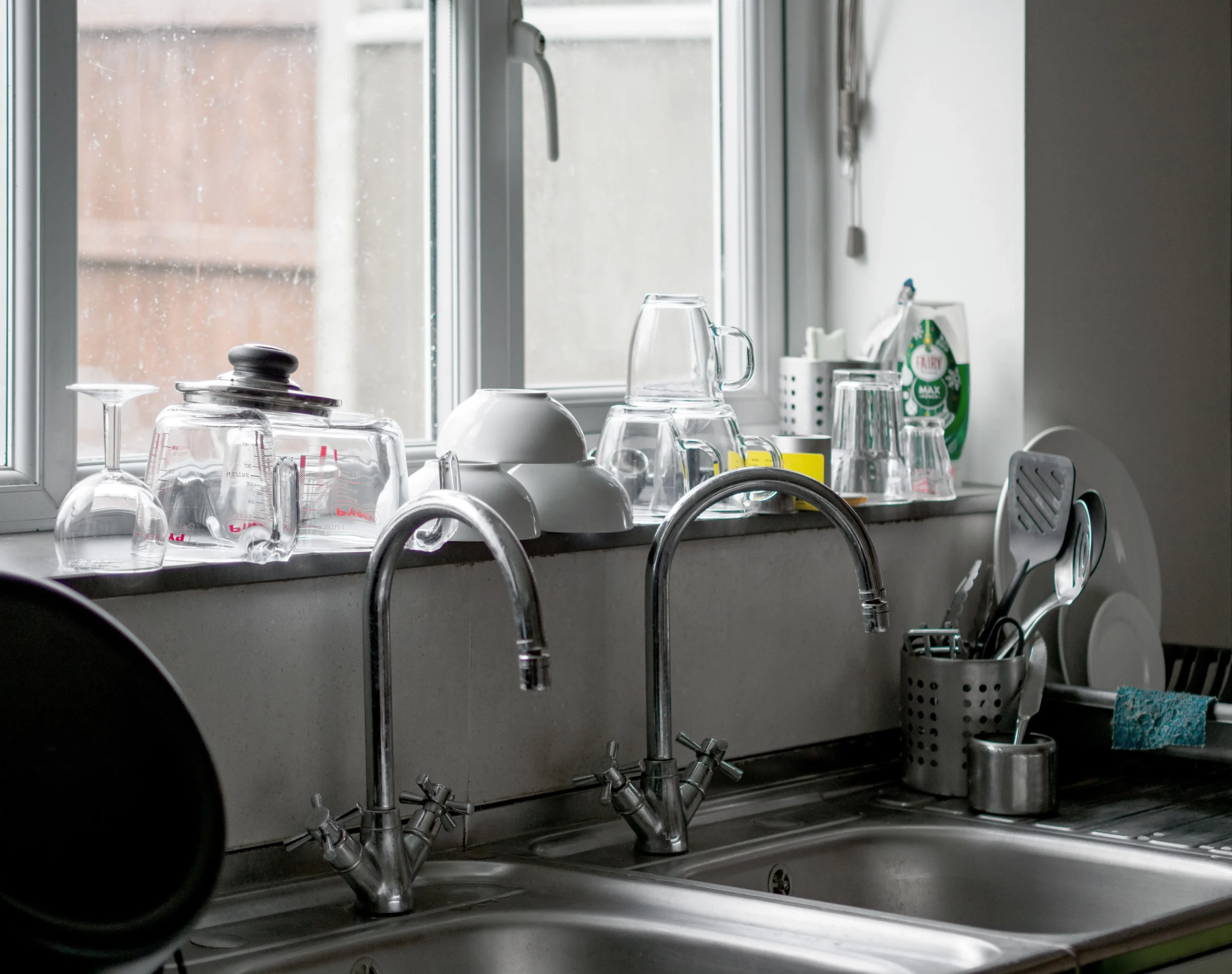
The height that makes pull-down faucets so practical can also work against them. If you have a window ledge, low shelving, or upper cabinets close to the sink, the arc may not fit. Tall spouts can also splash more in shallow sinks because the water falls from a greater height. And since the hose is short, filling a bucket sitting on the floor or a coffee maker on the counter beside the sink can be awkward.
How Pull-Out Kitchen Faucets Work
Pull-out faucets sit lower, with a compact spout and a spray head that detaches by pulling forward, toward you. The hose is typically longer than a pull-down hose, often by a noticeable margin.
That extra hose length is the defining advantage. You can direct water almost anywhere within reach: a pot on the counter, a vase that will not fit in the sink, or the second bowl of a double-basin sink without strain.
Where Pull-Out Designs Shine
Pull-out kitchen faucets are the practical answer for small kitchens and shallow sinks. The low profile fits under windows and cabinets where an arched spout would not, and the reduced height means less splash in a shallow basin. Anyone who regularly fills containers outside the sink, from watering cans to slow cooker inserts, will appreciate the reach.
They also tend to suit smaller hands. The spray heads are usually lighter and more compact, which matters if the primary cook in your home finds bulky faucet heads uncomfortable.
Where They Fall Short
Clearance is the trade-off. With a low spout, tall pots may need to be angled to fit underneath. The horizontal pull can also feel less intuitive for basic rinsing, since you are pulling the head toward your body rather than simply lowering it.
Matching the Faucet to Your Sink
Before choosing between the two styles, look at your sink itself.
Deep single-bowl sink: A pull-down faucet is usually the better match. The height advantage is fully usable, and splashing is contained.
Shallow or double-bowl sink: A pull-out faucet often wins. Less splash, easier reach into both bowls, and better fit under obstructions. If you are still deciding on the basin itself, a [kitchen sink buying guide] is worth reading before you commit to a faucet, since the two purchases should be made together.
Sink under a window: Measure the clearance. Many pull-down models will not fit, while nearly all pull-out models will.
Corner sinks or tight counters: The compact footprint of a pull-out faucet is generally easier to live with.
Matching the Faucet to Your Habits
Sink dimensions tell half the story. Your routines tell the rest.
If your evenings involve big-batch cooking, canning, or washing oversized cookware, the vertical clearance of a pull-down faucet will save you daily frustration. If you are more likely to fill a stockpot on the counter because it is too heavy to lift out of the sink full, the long hose of a pull-out faucet is the feature you will actually use.
Households with hard water should also consider maintenance. Both styles use aerators and spray heads that can clog with mineral buildup over time, and both benefit from occasional cleaning or replacement of those components. If you have dealt with weak spray or inconsistent flow before, our overview of [common faucet issues] covers what to check first.
Water usage matters too. Both designs are available with efficient flow rates, and if conservation is a priority, it is worth comparing options in our guide to low flow faucets before settling on a model.
The Bottom Line
Choose a pull-down faucet if you have a deep sink, open space above it, and cooking habits that involve large cookware. Choose a pull-out faucet if your sink is shallow, your clearance is limited, or you regularly need water beyond the basin. Both styles are reliable when you buy a quality unit with a solid docking mechanism and a smooth-retracting hose, so let your kitchen’s layout make the call rather than trends.
FAQs
Are pull-down faucets more popular than pull-out faucets?
Yes, pull-down faucets currently outsell pull-out models, largely because deep single-bowl sinks have become the standard in kitchen renovations. Popularity is not the same as suitability, though. In kitchens with limited clearance or shallow sinks, a pull-out faucet remains the smarter buy.
Do pull-out faucets have better reach?
Generally, yes. Pull-out faucets typically come with longer hoses, which makes it easier to fill containers on the counter or reach a second sink bowl. Pull-down hoses are shorter and designed mainly to cover the basin itself.
Which faucet style splashes less?
In a shallow sink, a pull-out faucet splashes less because water falls from a lower height. In a deep sink, either style performs well, and a pull-down faucet’s height advantage causes no real splash problem.
Can I replace a pull-out faucet with a pull-down model?
Usually, yes. Most pull-down and pull-out faucets mount in a standard single-hole configuration, so swapping styles is possible in most kitchens. Just confirm the clearance above your sink before buying a tall-arc model.
Do pull-down and pull-out faucets use the same replacement parts?
No, not interchangeably. Spray heads, hoses, and cartridges are specific to the faucet model, so bring your faucet’s brand and model number when shopping for replacement parts to ensure compatibility.
Find the Right Kitchen Faucet Locally
Whether you’re planning a renovation, replacing a worn fixture, or comparing spray head styles side by side, Chatham Plumbing carries a wide selection of kitchen faucets, sinks, and plumbing parts. Visit the showroom in Chatham to see pull-down and pull-out models in person, get knowledgeable guidance on compatibility with your sink, and pick up everything you need for the swap. If professional plumbing work is required, the team can also recommend reputable local plumbers serving Chatham, Sarnia, and Leamington.